


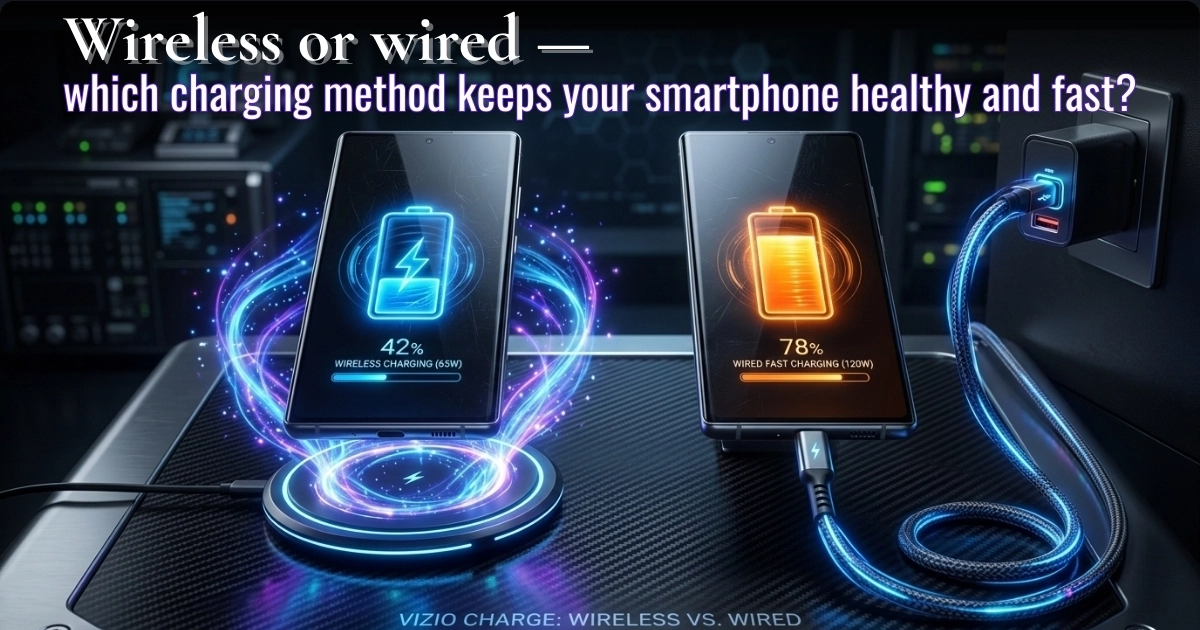


Wireless Charging vs Wired Charging: Which Is Better for Smartphone Users in Bangladesh?
Smartphones have become central to everyday life in Bangladesh. Whether it is checking emails, watching videos, using mobile banking apps, or communicating through messaging platforms, people rely on their phones throughout the day. Because of this heavy usage, charging convenience and speed are important factors for most users. Traditionally, smartphones have been charged using a wired connection, where a charging cable connects the phone to a power adapter. This method has been the standard for many years and remains the most common way people charge their devices. However, wireless charging has become increasingly popular in recent years, especially in premium smartphones. It allows users to charge their devices simply by placing them on a charging pad without plugging in a cable. Understanding how these two charging methods compare can help users decide which one fits their lifestyle better. Wired charging remains the fastest and most efficient way to charge a smartphone. Many modern phones support fast charging technologies that can refill a large portion of the battery within a short time. For example, some smartphones can reach 50 percent battery in about 30 minutes using compatible fast chargers. This speed is especially useful for people with busy schedules who need a quick power boost before leaving home or the office. Another advantage of wired charging is efficiency. Because power travels directly through the cable, less energy is lost during the charging process. This means the phone charges faster and produces less heat compared to wireless charging. Wired chargers are also more affordable and widely available in Bangladesh. Standard charging adapters and cables can cost anywhere from around BDT 300 to BDT 1,500 depending on the brand and charging speed. Fast chargers may cost slightly more, but they remain accessible for most users. Wireless charging, on the other hand, focuses more on convenience than speed. Instead of plugging in a cable, users simply place their phone on a wireless charging pad or stand. The device begins charging automatically through electromagnetic induction. This technology eliminates the need to constantly plug and unplug charging cables. For many users, this convenience is the main attraction. At home or in the office, a wireless charging pad placed on a desk or bedside table makes charging effortless. Users can quickly place the phone on the pad whenever they are not using it, keeping the battery topped up throughout the day. Wireless charging also reduces wear and tear on charging ports and cables. Over time, frequent plugging and unplugging can damage charging ports or loosen cables. Wireless charging avoids this issue because there is no physical connection between the phone and the charger. However, wireless charging has some limitations. One of the most Obvious differences is charging speed. Even though wireless charging has improved significantly, it is still generally slower than wired charging. This means users who need a quick battery boost may find wired charging more practical. Wireless charging can also produce more heat in the charging System. Because power is transferred through electromagnetic fields rather than direct contact, some energy is lost as heat. Excessive heat over long periods may affect battery health, although most modern smartphones include safety features to manage temperature. Another factor to consider is cost. Wireless charging pads are usually more expensive than basic wired chargers. In Bangladesh, a good wireless charging pad typically costs between BDT 1,500 and BDT 4,000, depending on quality and charging speed. While the price has become more affordable in recent years, it is still higher than many wired charging options. Compatibility is also important. Not all smartphones support wireless charging. This feature is usually found in mid-range to flagship devices, while many budget phones still rely only on wired charging. Before purchasing a wireless charger, users must ensure their device supports the technology. Daily usage habits also play a role in deciding which charging method is better. For example, users who frequently charge their phones while using them may prefer wired charging because the phone can remain in hand while connected. Wireless charging pads usually require the phone to stay in one place, which may not suit every situation. On the other hand, users who prefer a clean desk setup or dislike dealing with cables may find wireless charging more comfortable. Wireless charging stands can also allow users to view notifications or watch videos while the phone charges. In reality, many smartphone users today rely on both charging methods depending on the situation. Wired charging is often used when fast charging is needed, while wireless charging is used for convenience during daily routines. In conclusion, wired charging remains the best option for speed, efficiency, and affordability, making it ideal for most smartphone users in Bangladesh. Wireless charging offers greater convenience and a cable-free experience but may charge more slowly and cost more initially. For users whose phones support the feature, combining both methods can provide the best balance between speed and convenience.