




Wireless Charging Explained: How It Works and What to Know in Bangladesh
Wireless charging may seem like a modern luxury, but the technology behind it is actually based on simple physical principles. Instead of using a cable to transfer power directly into a smartphone, wireless charging uses electromagnetic fields to move energy from a charging pad to the phone’s battery. This makes charging more convenient, but it also comes with some limitations that users in Bangladesh should understand.
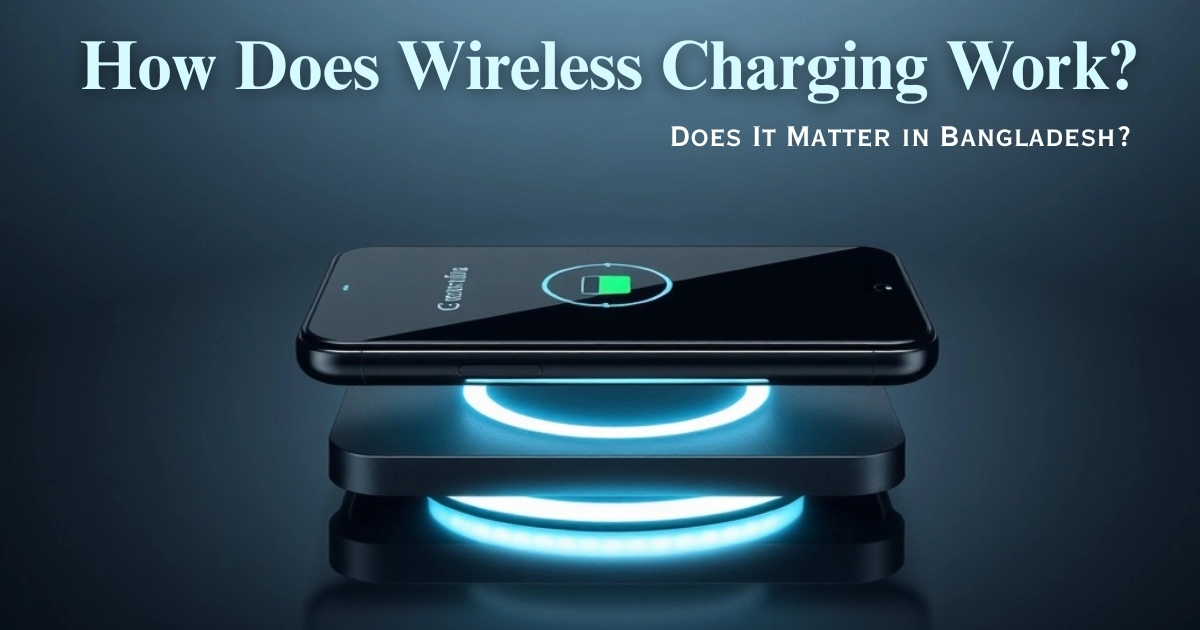
At the core of wireless charging are two coils. One coil is inside the charging pad, and the other is built into the smartphone. When the charging pad is connected to a power source, electricity flows through its coil, creating an electromagnetic field. When a compatible phone is placed on the pad, the coil inside the phone picks up this energy and converts it back into electrical power, which then charges the battery.
For wireless charging to work properly, the phone must be positioned correctly on the pad. If the coils are not aligned well, charging can be slow or may not start at all. This is why users sometimes need to adjust the phone slightly to ensure charging begins. In daily use, especially at night or during busy moments, this alignment requirement can be both a minor inconvenience and a learning experience.
One of the main differences between wireless and wired charging is efficiency. Wired charging transfers power directly and efficiently, while wireless charging loses some energy as heat during transmission. This is why wireless charging is generally slower and generates more warmth. In Bangladesh’s warm climate, extra heat can affect charging speed and long-term battery health if not managed properly.
Charging speed is another important factor. Most wireless chargers provide lower power compared to fast wired chargers. While wireless charging is improving, it still takes longer to fully charge a phone. For users who need quick power during the day, wired charging remains more practical. Wireless charging works best for slow, steady charging, such as placing the phone on a desk or bedside table.
Phone cases and accessories also affect wireless charging performance. Thick cases, metal components, or magnetic attachments can interfere with the electromagnetic field. In such cases, charging may become slower or fail completely. Users often need to remove certain covers or choose wireless-friendly cases for reliable performance.
In Bangladesh, electricity stability and charging habits play a role in how useful wireless charging is. During power cuts, wireless chargers offer no advantage over wired ones since both require electricity. However, for users who charge phones at offices, study desks, or shared spaces, wireless charging offers convenience by reducing cable wear and tear.
Safety is a common concern, but wireless charging is generally safe. Modern smartphones and chargers include built-in protections to prevent overheating, overcharging, and electrical damage. Charging automatically slows down as the battery fills up, similar to wired charging. Still, keeping the phone and charger in a well-ventilated area helps reduce heat buildup.
Another advantage of wireless charging is reduced physical wear. Charging ports can loosen or collect dust over time, especially in humid or dusty environments common in some parts of Bangladesh. Wireless charging avoids this issue by eliminating frequent plugging and unplugging.
However, wireless charging is not ideal for everyone. It is less efficient, slower, and less portable compared to wired charging. Carrying a charging pad is less convenient than carrying a cable and power adapter. For users who travel frequently or rely on fast charging throughout the day, wired charging remains the better choice.
That said, many users adopt a mixed approach. Wired charging is used during the day for speed, while wireless charging is used at night for convenience. This balanced usage reduces stress on charging ports and provides a more comfortable charging experience.
As smartphone technology evolves, wireless charging is becoming more accessible and efficient. Some mid-range phones now include wireless charging, making it available to a wider range of users in Bangladesh. Understanding how it works helps users decide whether it fits their needs.
Conclusion
Wireless charging works by transferring power through electromagnetic fields, offering convenience and reduced cable wear. While it is slower and less efficient than wired charging, it is safe and practical for steady charging. For Bangladeshi users, wireless charging is best seen as a convenient complement to traditional charging, not a full replacement.