


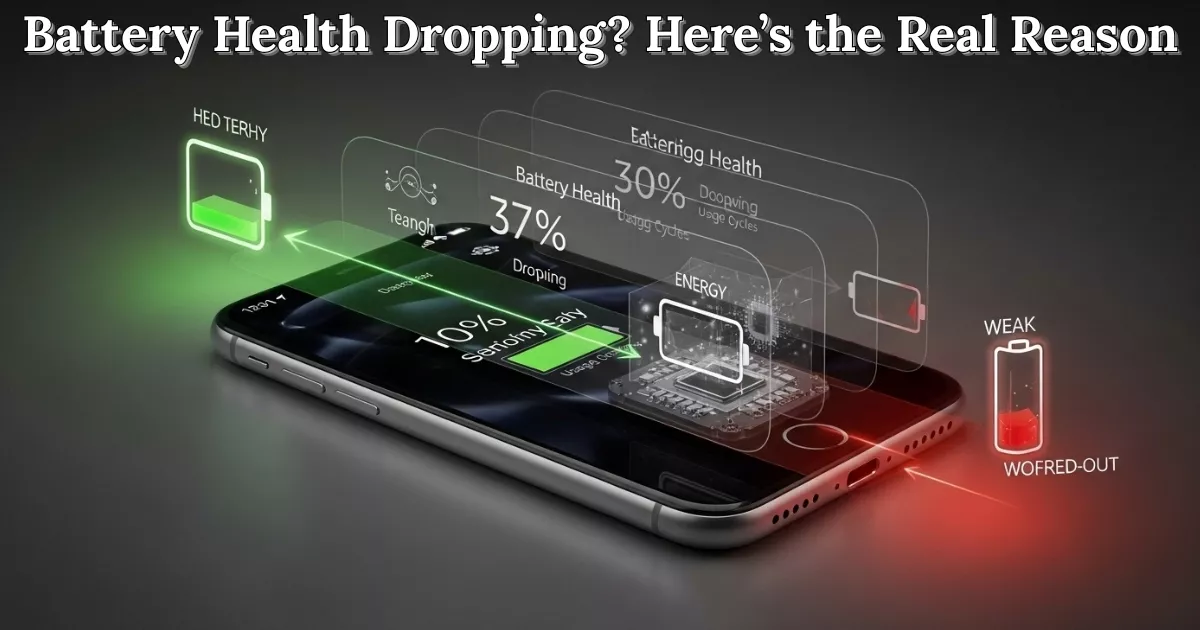


Why Smartphone Batteries Degrade Over Time in Bangladesh
Smartphones have become an essential part of daily life in Bangladesh, from communication and mobile banking to online classes and entertainment. However, one common issue users face is battery performance gradually getting worse over time. A phone that once lasted all day may start needing multiple charges within a few hours. This is not a manufacturing fault in most cases—it is a natural process known as battery degradation.
Modern smartphones use lithium-ion batteries, which are designed to be efficient, lightweight, and rechargeable. While these batteries are reliable, they are not built to last forever. Each time you charge and discharge your phone, it completes what is known as a charge cycle. Over time, these cycles cause chemical wear inside the battery, reducing its ability to hold a full charge.
One of the biggest reasons for battery degradation is repeated charging. For example, if you charge your phone from 0% to 100% every day, the battery experiences full cycles more frequently. Even partial charging throughout the day adds up. After a certain number of cycles—typically around 300 to 500—the battery starts to lose capacity. This is why older phones struggle to maintain long battery life.
Heat is another major factor, especially in a country like Bangladesh where temperatures can remain high for much of the year. Excessive heat accelerates the chemical reactions inside the battery, leading to faster wear. Leaving your phone under direct sunlight, inside a hot vehicle, or even using heavy apps while charging can increase internal temperature. Over time, this heat exposure significantly reduces battery health.
Charging habits also play an important role. Many users keep their phones plugged in overnight, even after reaching 100%. While modern devices have protection systems to reduce overcharging, keeping the battery at full charge for long periods can still stress it. Similarly, letting the battery drop to 0% frequently can also damage it. Lithium-ion batteries perform best when kept between roughly 20% and 80%.
Another common issue in Bangladesh is the use of low-quality or unofficial chargers. These chargers may not regulate voltage properly, which can lead to inconsistent charging and additional stress on the battery. In some cases, this can even pose safety risks. Using original or certified chargers helps ensure stable power delivery and protects long-term battery health.
Heavy usage patterns also contribute to faster degradation. Activities like gaming, video streaming, and constant mobile data usage generate more heat and drain the battery quickly. When combined with charging, this creates a cycle of heat and stress that wears out the battery faster. Budget smartphones, which are popular in Bangladesh, may be more vulnerable due to less advanced cooling systems.
Software and background apps can also have an indirect impact. Apps running continuously in the background consume power and increase the number of charge cycles. Over time, this leads to more frequent charging and faster battery aging. Keeping your phone updated and managing apps properly can reduce unnecessary battery usage.
It is also important to understand that battery degradation is unavoidable to some extent. Even if you follow all best practices, the battery will slowly lose capacity over the years. This is simply the nature of lithium-ion technology. However, the rate of degradation can vary greatly depending on how the phone is used and maintained.
In Bangladesh, where many users rely on their smartphones for long hours due to limited access to alternative devices, battery health becomes even more critical. A degraded battery not only affects convenience but can also reduce the overall lifespan of the phone, forcing users to spend money on repairs or replacements sooner than expected.
The good news is that small changes in daily habits can make a noticeable difference. Avoiding extreme temperatures, using quality chargers, not overcharging, and managing heavy usage can all help slow down battery wear. Even something as simple as removing your phone case while charging in hot weather can help reduce heat buildup.
In conclusion, smartphone batteries degrade over time due to chemical wear, heat, charging habits, and usage patterns. While this process cannot be completely stopped, it can be managed. By adopting smarter charging habits and being mindful of environmental factors, users in Bangladesh can extend their battery life and get better long-term performance from their devices. Investing a little care today can save both money and frustration in the future.