


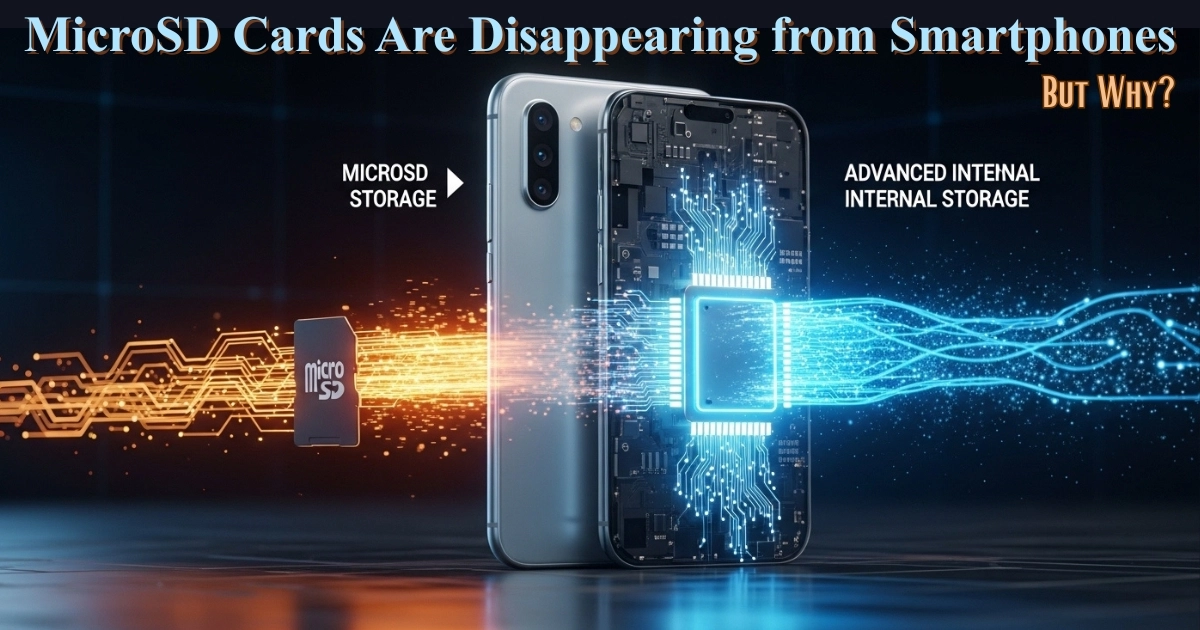


Why Modern Smartphones No Longer Use MicroSD Cards in Bangladesh
For years, microSD cards were a key feature in smartphones, offering users the ability to expand storage for photos, videos, and apps. In Bangladesh, where budget-conscious buyers often wanted more storage without paying extra for higher-capacity models, microSD cards were highly valued. However, in 2026, most modern smartphones no longer include microSD slots, and this trend has practical reasons that impact everyday users. One major reason is Accomplishment. Built-in storage in modern smartphones, such as UFS 3.1 or UFS 4.0, is significantly faster than most microSD cards. Faster storage translates into quicker app launches, smoother multitasking, and improved gaming experiences. Even high-speed microSD cards cannot match the read and write speeds of internal storage, which can become a bottleneck if used for installing apps or recording high-resolution videos. For Bangladeshi users who enjoy mobile photography, gaming, or video streaming, relying on microSD cards can slow down the overall smartphone experience. Security and reliability are also important factors. Built-in storage is integrated into the phone’s design and firmware, making it less prone to corruption, physical damage, or accidental removal. MicroSD cards, while convenient, can fail or become dislodged, potentially causing data loss. Modern smartphones prioritize data integrity and system stability, which is harder to guarantee with external memory. For users in Bangladesh who rely on smartphones for mobile banking, work documents, and personal media, internal storage offers peace of mind. Design considerations have also influenced the shift. Modern smartphones are slimmer, lighter, and feature larger batteries and advanced cooling systems. Including a microSD card slot requires additional space and mechanical parts, which can conflict with sleek designs and structural integrity. Removing the slot allows manufacturers to allocate more space for bigger batteries or improved camera systems—features that are highly valued by Bangladeshi consumers. Another factor is the decreasing cost of larger internal storage. In Bangladesh, it is now common to find budget and mid-range phones with 128GB or even 256GB of storage at reasonable prices. This makes microSD cards less necessary for everyday users. Many people also use cloud storage, streaming services, and external drives to manage files, reducing the need for physical expandable memory. Photos and videos can be uploaded to cloud services or shared instantly, freeing up space on the device. The move away from microSD cards also simplifies software optimization. Operating systems can perform better when they only need to manage internal storage. This reduces potential compatibility issues, improves app installation speed, and enhances overall device stability. Users in Bangladesh benefit from smoother updates and fewer errors compared to phones that mix internal and external storage. Despite these advantages, some users miss the flexibility of expandable storage. Travelers or photographers who capture large volumes of data may still prefer phones with microSD slots. However, modern alternatives, such as high-capacity internal storage or portable wireless drives, address this need while maintaining the benefits of faster, more reliable internal memory. In conclusion, modern smartphones no longer use microSD cards because built-in storage is faster, more reliable, and easier to manage. The trend also supports slimmer designs, bigger batteries, and advanced camera systems—features important to Bangladeshi users. For most buyers, choosing a phone with sufficient internal storage and using cloud services provides the best combination of speed, reliability, and convenience. While expandable memory can still be useful in niche cases, the shift reflects broader improvements in smartphone technology and user experience.