




What Is Refresh Rate in Smartphones? 60Hz vs 120Hz Explained for Bangladesh Users
When buying a new smartphone today, you will often see terms like 60Hz, 90Hz, or 120Hz listed under display features. For many users in Bangladesh, these numbers sound technical and confusing. However, refresh rate plays an important role in how smooth a phone feels during daily use.
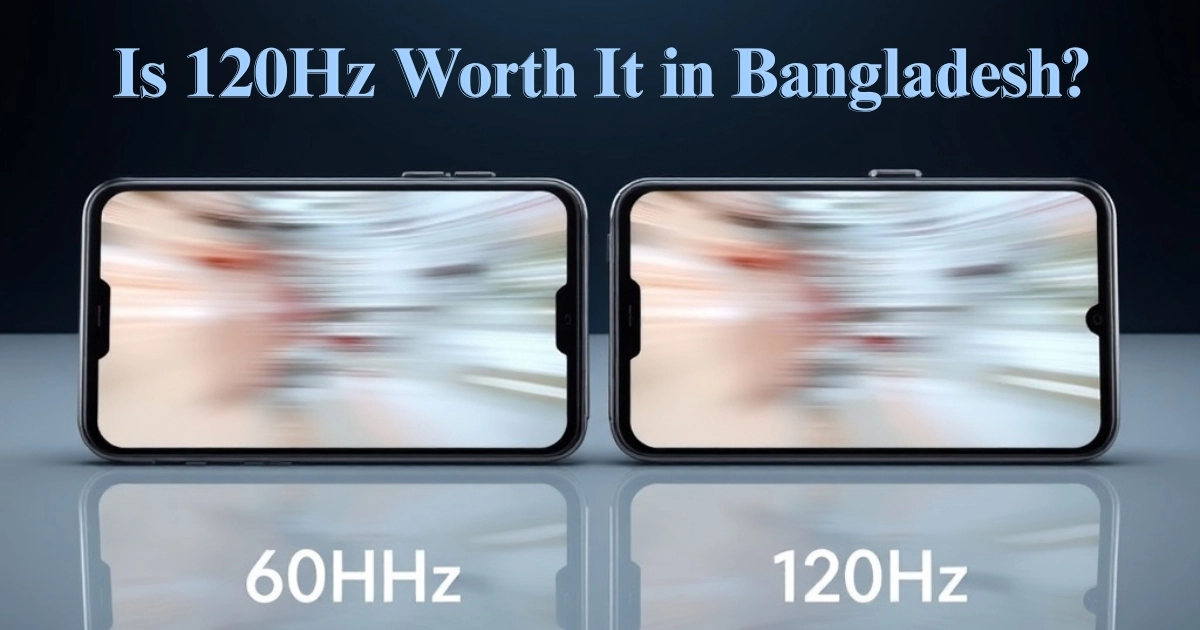
Refresh rate refers to how many times a smartphone screen refreshes the image every second. A 60Hz display refreshes the screen 60 times per second, while a 120Hz display refreshes it 120 times per second. The higher the number, the smoother motion appears on the screen.
The most noticeable difference between 60Hz and 120Hz can be seen while scrolling. On a 120Hz phone, scrolling through social media, news apps, or web pages feels smoother and more fluid. Animations look cleaner, and text moves more naturally. On a 60Hz display, scrolling is still perfectly usable, but it may feel slightly less smooth, especially when switching quickly between apps.
For video watching, the difference is less dramatic. Most online videos and movies are recorded at 24fps, 30fps, or 60fps. A 60Hz screen already matches these frame rates well. A 120Hz display does not necessarily make videos look better unless special processing is applied. For users who mainly watch YouTube, Facebook videos, or streaming content, refresh rate may not be a major factor.
Gaming is where higher refresh rates make the biggest impact. Many modern mobile games now support high frame rates. On a 120Hz phone, compatible games can feel more responsive, smoother, and more enjoyable. Fast-paced games such as racing or shooting titles benefit the most. However, not all games support 120Hz, and performance also depends on the phone’s processor and graphics capability.
Battery life is an important consideration for Bangladeshi users who rely heavily on mobile data and long daily usage. Higher refresh rates consume more power because the screen refreshes more often. A 120Hz display can drain the battery faster than a 60Hz display, especially if it runs at full refresh rate all the time. Many smartphones now use adaptive refresh rate technology, which automatically switches between lower and higher refresh rates depending on usage. This helps balance smoothness and battery efficiency.
Price is another key factor in the local market. Smartphones with 60Hz displays are usually more affordable and widely available in budget and mid-range segments. Phones with 120Hz displays are more common in mid-range and higher-priced models. While prices vary, choosing a higher refresh rate often means paying extra. Buyers should consider whether the smoother experience is worth the additional cost based on their usage habits.
Daily tasks such as calling, messaging, reading emails, attending online classes, and browsing websites work perfectly fine on a 60Hz display. Many users may not even notice a major difference unless they compare devices side by side. On the other hand, users who enjoy gaming, frequent scrolling, or simply want the smoothest possible experience may appreciate a 120Hz screen.
Another point to consider is long-term comfort. Some users find higher refresh rates easier on the eyes because motion appears more natural. Others are completely comfortable with 60Hz and see no reason to upgrade. Personal sensitivity plays a role here.
In Bangladesh, where internet speed, battery backup, and value for money matter greatly, refresh rate should not be the only deciding factor. Screen quality, brightness, battery capacity, and overall performance are equally important.
Conclusion
A 120Hz display offers smoother scrolling and better gaming performance, while a 60Hz display remains reliable, battery-friendly, and cost-effective. For most everyday users in Bangladesh, 60Hz is still enough, but those seeking extra smoothness may find 120Hz worth the upgrade.