




What Is OIS in Smartphone Camera and Why It Matters in Bangladesh
Smartphone cameras have improved rapidly over the last few years, and features that were once limited to professional cameras are now common in mid-range and premium phones. One such feature is Optical Image Stabilization, commonly known as OIS. While many users see “OIS” written in phone specifications, not everyone understands what it actually does or why it matters.
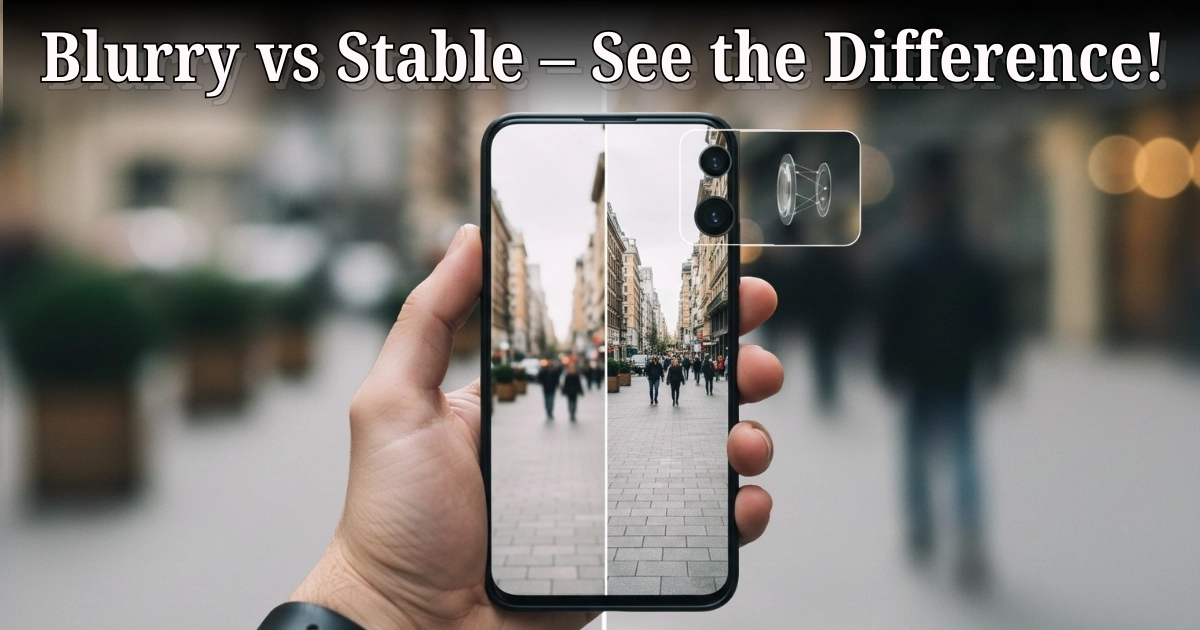
At its core, OIS is a hardware-based technology designed to reduce the effects of hand movement while taking photos or recording videos. Even the steadiest hands naturally shake slightly, especially when shooting in low light or while moving. OIS works by physically shifting the camera lens or sensor to counteract these small movements, keeping the image stable at the moment the photo is captured.
This becomes especially important in real-life situations common in Bangladesh. Many people take photos at night markets, family gatherings, roadside cafés, or during evening travel. In low light, the camera needs more time to capture enough light, which increases the risk of blurry images. OIS helps by stabilizing the camera, allowing clearer photos without requiring perfectly still hands.
Without OIS, smartphones rely mainly on digital image stabilization. This software-based method attempts to reduce blur after the photo or video is captured. While digital stabilization can help, it cannot fully match the clarity and sharpness provided by true optical stabilization. Software methods may crop images or reduce detail, whereas OIS preserves image quality because it works physically during the capture process.
Video recording is another area where OIS makes a clear difference. When recording videos while walking, riding in a car, or even standing in a crowded place, small shakes can make footage uncomfortable to watch. OIS smooths out these movements, producing more stable and professional-looking videos. This is particularly useful for Bangladeshi users who create content for social media, record family events, or capture travel moments without using additional equipment.
OIS also plays a major role in night photography. Many smartphones use night modes that combine multiple images to improve brightness and detail. A stable camera is crucial for these modes to work effectively. With OIS, the phone can capture sharper frames, resulting in clearer night photos with less noise. This is why phones with OIS often perform noticeably better after sunset compared to similar models without it.
However, OIS does affect smartphone pricing. Because it requires additional hardware components, phones with OIS are generally more expensive than those without it. In the Bangladesh market, OIS is most commonly found in upper mid-range and flagship devices. Budget smartphones often skip OIS to keep costs low, relying instead on software processing.
That said, the presence of OIS does not automatically mean a phone has the best camera. Image quality still depends on multiple factors such as sensor size, lens quality, image processing, and overall camera tuning. A phone with OIS but a weak sensor may still underperform compared to a well-optimized camera without OIS in bright daylight. OIS shows its true strength in challenging conditions like low light and motion.
For everyday users in Bangladesh, the value of OIS depends on usage habits. If most photos are taken during the day in good lighting, OIS may not be essential. But for those who often take photos at night, record videos while moving, or want consistent results without retaking shots, OIS becomes a highly useful feature.
Battery consumption is another point users often ask about. OIS uses a small amount of power, but the impact on overall battery life is minimal and usually unnoticeable in daily use. The benefits in image quality far outweigh this minor power usage.
In recent years, smartphone brands have started introducing OIS in more affordable models, making it accessible to a wider group of Bangladeshi users. As competition increases, OIS is slowly becoming a standard expectation rather than a luxury feature.
Conclusion
OIS is not just a technical term—it directly improves photo and video quality in real-life situations common in Bangladesh. If photography, night shots, or stable video recording matter to you, choosing a smartphone with OIS is a smart decision. While it may slightly increase the price, the improvement in clarity and consistency makes it a worthwhile investment for many users.