


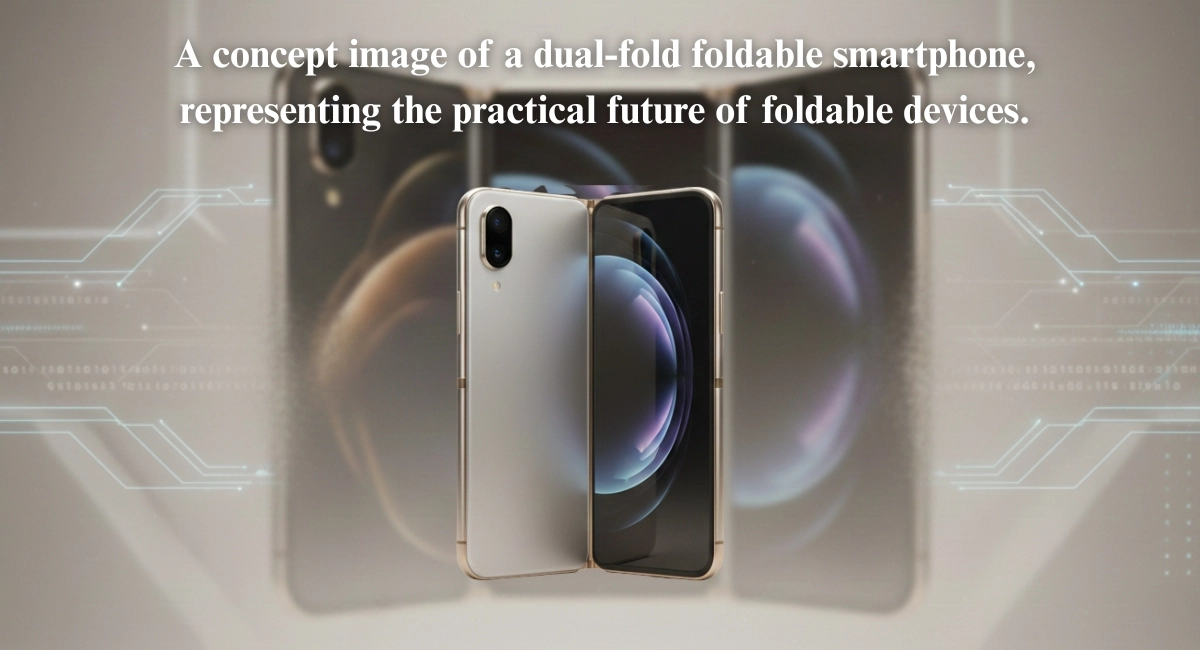


The Future of Foldables Is Not Tri-Folds
Understanding the Current Fold-able Phone Trend
Foldable smartphones started as an exciting idea. Brands wanted to offer bigger screens without making phones bulky. First came book-style foldables, then flip phones, and now some companies are experimenting with tri-fold designs. At first glance, tri-fold phones look futuristic and impressive. But when we look deeper, it becomes clear that the future of foldables is not tri-folds.
Technology history shows that not every flashy innovation becomes mainstream. Many ideas look great in demos but fail in real-life use. Tri-fold phones fall into this risky category.
Why Tri-Fold Phones Look Attractive at First
Tri-fold devices promise a tablet-sized screen that fits into your pocket. For tech lovers, this sounds like the perfect solution. More screen space means better multitasking, bigger visuals, and a new kind of mobile experience.
Brands also use tri-folds to show innovation leadership. Being “first” creates buzz, media coverage, and curiosity. But excitement alone does not decide the future of smartphones. Practical use, durability, and cost matter more.
Real-World Problems with Tri-Fold Designs
Tri-fold phones introduce more moving parts than any previous design. More hinges mean more chances of failure. Even current dual-fold phones still struggle with hinge durability, screen creases, and dust protection. Adding another fold only increases these problems.
Weight is another major issue. A tri-fold phone needs extra layers, hinges, and reinforcement. This makes the device heavier and thicker. Users already complain about foldables feeling bulky. Tri-folds push this problem even further.
Battery design also becomes complicated. Fitting a strong battery into a three-fold structure without increasing thickness is extremely difficult. As a result, users may get larger screens but weaker battery life.
Among smartphones in the same price range, Fold Phone has been generating a lot of discussion lately. Those who want to check the latest market price can find the details here. Related smartphone prices in Bangladesh
High Cost Limits Mass Adoption
Price plays a huge role in deciding the future of any technology. Foldable phones are already expensive for most users. Tri-fold phones cost even more due to complex engineering and low production scale.
When a phone costs as much as a high-end laptop, people expect perfection. Any small issue feels unacceptable. This makes tri-fold phones risky not only for users but also for manufacturers. Mass adoption becomes nearly impossible at such price levels.
Software Experience Is Still Not Ready
Hardware alone cannot define success. Software must fully support the device. Tri-fold phones need apps that smoothly adapt to multiple screen sizes and folding positions. Right now, even dual-fold phones struggle with app optimization.
Developers are unlikely to prioritize tri-fold-specific layouts because the user base is very small. Without strong software support, the extra screen space loses its value. A device with powerful hardware but poor software experience cannot shape the future.
What Users Actually Want from Foldables
Most users want simple improvements, not complex designs. They want thinner foldables, lighter bodies, stronger hinges, and longer battery life. They want phones that feel normal in daily use but offer flexibility when needed.
Tri-fold phones focus more on “wow factor” than real user needs. The average user does not need a phone that unfolds into three parts. They need reliability, comfort, and value for money.
The More Likely Future of Foldable Phones
The real future of foldables lies in refinement, not expansion. Brands will focus on making current foldable designs slimmer, more durable, and more affordable. Crease reduction, better hinge technology, and improved outer displays will matter more than adding extra folds.
We may also see better rollable or stretchable display technology in the future. These ideas solve screen size problems without adding heavy hinges and complex folding systems. Such solutions align better with long-term usability.
Final Thoughts on the Future of Foldables
Tri-fold phones are impressive engineering experiments, but they are not the future of foldables. They are more like concept devices that push boundaries rather than practical products for everyday users.
The future belongs to foldables that feel simple, reliable, and natural to use. Instead of adding more folds, the industry will grow by perfecting what already works. In the end, innovation succeeds not when it looks complex, but when it quietly improves daily life.