


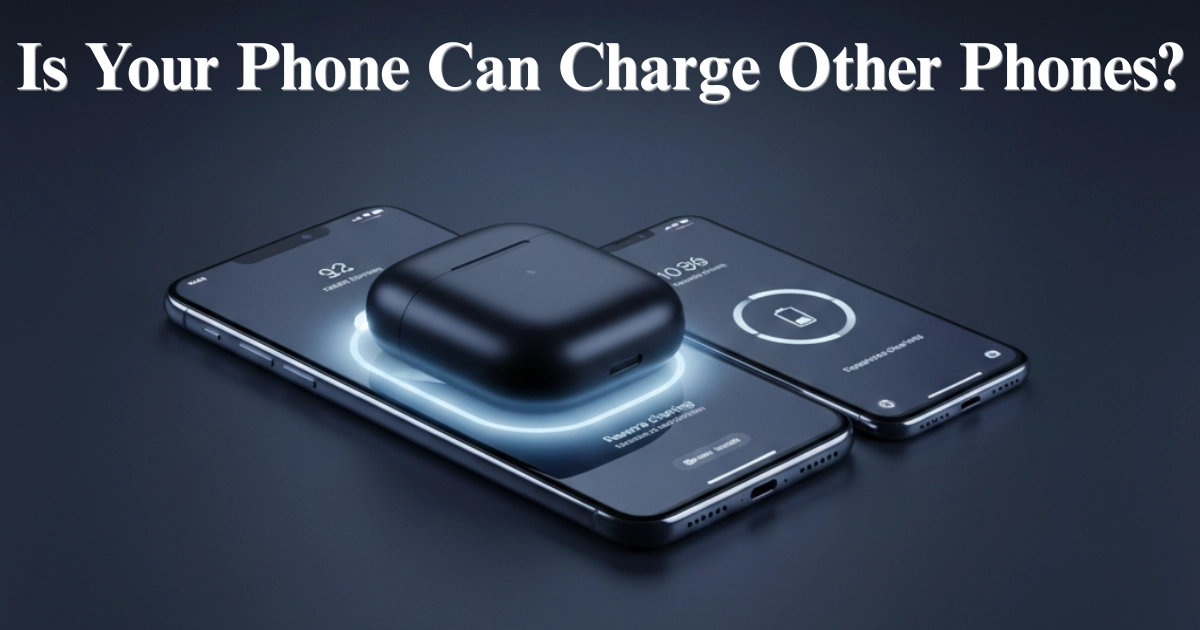


Reverse Charging Explained: How It Works and Why It Matters in Bangladesh
Modern smartphones are no longer just devices that consume power. With reverse charging, they can also act as a power source for other gadgets. This feature allows a phone to transfer part of its battery charge to another device, such as wireless earbuds, a smartwatch, or even another smartphone. While it may sound advanced, the idea behind reverse charging is quite simple and practical.
Reverse charging works by turning your phone into a power bank. When activated, the phone sends power outward instead of receiving it. There are two main types of reverse charging: wired and wireless. Wired reverse charging uses a cable to connect two devices, while wireless reverse charging uses contact-based charging similar to a wireless charging pad.
In wired reverse charging, the phone supplies power through its charging port. A compatible cable is required, and the phone must support this feature at the hardware and software level. Once connected, the phone begins transferring energy to the other device. This method is usually more efficient and slightly faster than wireless reverse charging.
Wireless reverse charging, on the other hand, allows a phone to charge another device by placing it on the back of the phone. The phone creates an electromagnetic field, which transfers power to the receiving device. This method is convenient but slower and less efficient. It also requires precise positioning, which can be inconvenient during use.
Charging speed is one of the biggest limitations of reverse charging. Because smartphones are not designed to act as high-capacity power banks, the output power is limited. As a result, charging another device takes time and drains the host phone’s battery quickly. This makes reverse charging unsuitable for long charging sessions but useful for short, emergency top-ups.
In Bangladesh, reverse charging can be particularly helpful during travel or power outages. Load shedding is still a reality in some areas, and access to power sockets is not always guaranteed. In such situations, being able to charge wireless earbuds or a feature phone for a short time can be very useful.
Reverse charging also reduces the need to carry extra accessories. For users who rely on multiple gadgets, such as smartwatches and wireless earphones, reverse charging offers a simple backup solution. Instead of carrying separate chargers or power banks, a single phone can provide emergency power when needed.
However, there are important things users should consider. Heat generation is one concern, especially in Bangladesh’s warm climate. Reverse charging, particularly wireless, produces extra heat. Excessive heat can affect battery health if used frequently or for long periods. It is best to use reverse charging in well-ventilated environments and avoid covering the devices during charging.
Battery drain is another factor. Using reverse charging reduces the main phone’s battery quickly. If your phone battery is already low, using reverse charging may leave you without enough power for essential tasks such as calls or internet access. This is why reverse charging is best used when the phone has sufficient battery reserve.
Compatibility also matters. Not all devices support wireless reverse charging, and some may charge very slowly. Phone cases, metal accessories, or thick covers can interfere with wireless power transfer. Removing cases often improves performance.
From a long-term perspective, reverse charging should be treated as a convenience feature rather than a daily charging method. Regularly draining your phone to charge other devices may affect battery lifespan over time. For daily use, traditional chargers or power banks are still more reliable.
Despite these limitations, reverse charging adds flexibility to modern smartphones. It reflects how phones are becoming central hubs for personal technology. For Bangladeshi users who value preparedness and convenience, reverse charging can be a helpful tool when used wisely.
Conclusion
Reverse charging allows a smartphone to share its battery with other devices, making it useful in emergencies and travel situations. While it is not a replacement for regular charging methods, it offers added convenience. For users in Bangladesh, reverse charging is best used occasionally and thoughtfully to get the most benefit without affecting battery health.