


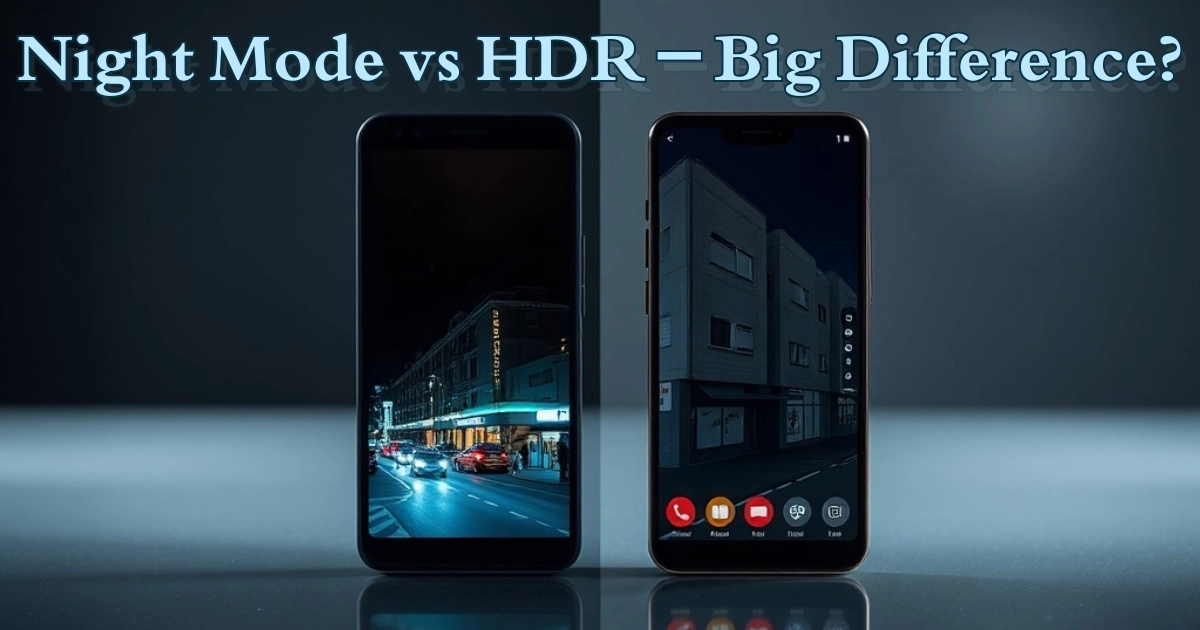


Night Mode vs HDR – What Is the Difference?
Modern smartphone cameras rely heavily on software to produce good-quality photos. Among the most commonly used features are Night Mode and HDR. While both aim to improve image quality, they are designed for very different situations. Understanding how they work and when to use them can significantly improve everyday photography for users in Bangladesh.
HDR stands for High Dynamic Range. It is designed to handle scenes where there is a big difference between bright and dark areas. For example, taking a photo outdoors on a sunny day often results in either an overexposed sky or a dark subject. HDR solves this by capturing multiple images at different exposure levels and combining them into one balanced photo. The result is a picture with better detail in both highlights and shadows.
In Bangladesh, HDR is especially useful for outdoor photography. Photos taken during daytime, particularly under strong sunlight, often benefit from HDR. Common situations include taking photos in open fields, city streets, rooftops, or near windows. HDR helps keep the sky blue while still showing details on faces or buildings. It is also helpful when photographing indoors with bright light coming from outside, such as family photos taken near windows.
Night Mode, on the other hand, is specifically designed for low-light conditions. When light levels drop, smartphone cameras struggle to capture clear images without noise or blur. Night Mode works by taking multiple photos over a few seconds and combining them to brighten the image while reducing noise. The phone may ask the user to hold still during this process, as stability is important for good results.
For Bangladeshi users, Night Mode is extremely useful for evening and night photography. Common examples include night markets, street scenes, indoor photos with limited lighting, and evening gatherings. Night Mode allows the camera to capture more light without relying heavily on flash, resulting in more natural colors and better detail.
One key difference between Night Mode and HDR is timing. HDR works almost instantly and is suitable for moving subjects. Night Mode takes longer to capture images, making it less ideal for fast movement. If people are walking quickly or objects are moving, Night Mode may produce blur. HDR, however, handles motion better and is more reliable for quick shots.
Another difference is how these modes affect image appearance. HDR aims to maintain a natural look by balancing light and shadow. Overuse of HDR can sometimes make photos look flat or unnatural if not well-optimized. Night Mode intentionally brightens dark scenes, which can sometimes make night photos look brighter than real life. While this improves visibility, it may reduce the natural night atmosphere in some cases.
Many smartphones automatically decide when to use HDR. In good lighting conditions, HDR may activate by default without user input. Night Mode usually requires manual activation, although some phones automatically suggest it in low light. Understanding when to override automatic settings can help users get better results.
It is also important to know that Night Mode and HDR are not replacements for each other. They serve different purposes and are optimized for different lighting conditions. Using HDR at night usually does not improve image quality and may even make photos noisier. Similarly, using Night Mode during the day can result in overly bright images with unnatural colors.
Camera hardware also plays a role in how effective these modes are. Phones with better sensors and stabilization produce better Night Mode results. HDR performance depends heavily on image processing and tuning. This is why two phones with similar specifications can produce very different results in the same lighting conditions.
For everyday users in Bangladesh, choosing the right mode depends on the situation. During daylight or high-contrast scenes, HDR is the better choice. In low light or nighttime environments, Night Mode delivers clearer and brighter photos. Learning to switch between these modes based on lighting can greatly improve photography without any extra effort.
Conclusion
Night Mode and HDR are powerful tools, but they are designed for different conditions. HDR is best for balancing light in bright or mixed lighting, while Night Mode excels in low-light environments. By understanding when to use each mode, Bangladeshi smartphone users can capture better photos in any situation with confidence.