


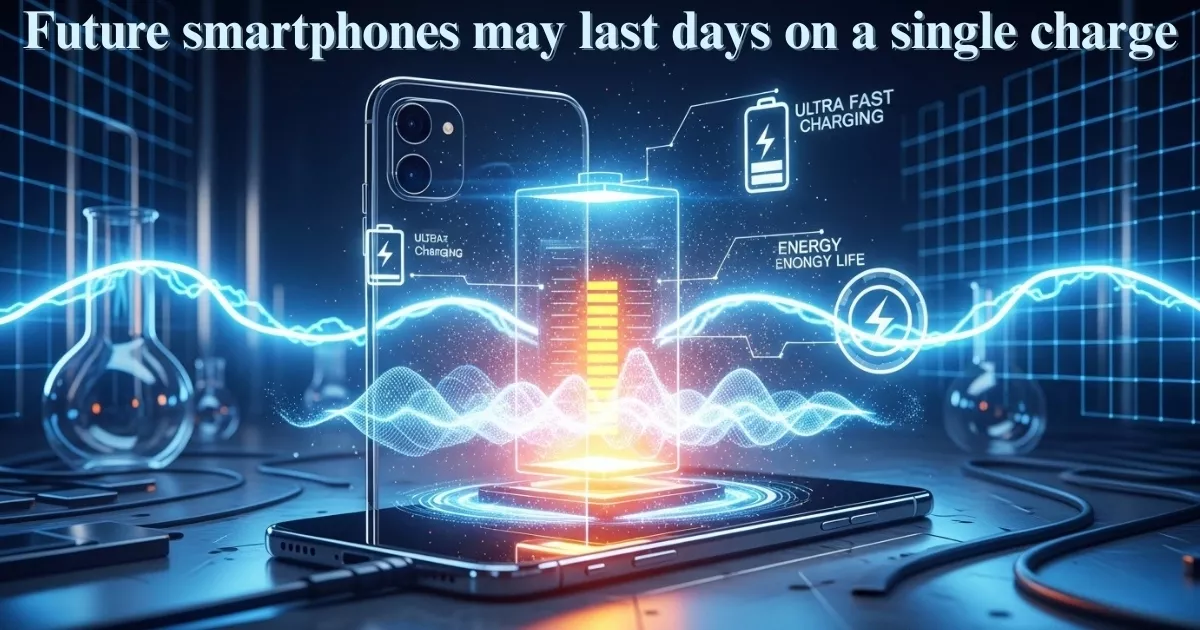


New Battery Technologies Coming to Smartphones in Bangladesh
Smartphones have become an Indispensable part of daily life in Bangladesh. From online banking and social media to mobile gaming and video streaming, people depend heavily on their devices throughout the day. However, battery limitations remain one of the biggest challenges for smartphone users. While processors, cameras, and displays continue to improve rapidly, battery technology has evolved at a slower pace. Fortunately, several new battery technologies are currently being developed and tested. These innovations aim to provide longer battery life, faster charging, improved safety, and better durability. In the coming years, these advancements could significantly change how people use smartphones in Bangladesh. One of the most promising developments is the silicon-carbon battery. Traditional lithium-ion batteries use graphite as the main material in their anodes. Silicon-carbon technology replaces part of this graphite with silicon, allowing the battery to store much more energy in the same physical space. For smartphone users, this means devices can have larger battery capacity without increasing the phone’s size or weight. Some manufacturers have already started introducing this technology in new smartphones, allowing batteries to reach capacities above 5000mAh while maintaining slim designs. For users in Bangladesh who spend long hours outside or experience frequent power outages, this type of battery could offer a significant improvement in daily usability. Another major innovation expected in the future is the solid-state battery. Unlike traditional lithium-ion batteries that use liquid electrolytes, solid-state batteries use solid materials to move energy between components. This design can increase energy density while also improving safety. One of the main advantages of solid-state batteries is their reduced risk of overheating. Because there is no liquid electrolyte involved, the chances of leakage or thermal issues become much lower. In addition, these batteries could potentially store more power and charge faster. Although the technology is still being developed and may take several years to become common in smartphones, many experts believe solid-state batteries could transform the mobile industry. Graphene battery technology is another exciting area of research. Graphene is an extremely thin and strong material made of carbon atoms arranged in a honeycomb structure. When used in batteries, graphene can improve conductivity and heat management. This allows batteries to charge faster and operate more efficiently. Graphene-based batteries may also support ultra-fast charging speeds without causing excessive heat buildup. For smartphone users in Bangladesh, where fast charging is increasingly important due to busy lifestyles, this type of technology could make a noticeable difference. Fast charging technology itself is also evolving quickly. Many modern smartphones already support fast charging solutions that can recharge a large portion of the battery in a short time. However, upcoming technologies are expected to push these limits even further while maintaining battery health. New charging systems are being designed to deliver high power more safely by controlling temperature and voltage more precisely. Improved battery management software also helps optimize charging patterns. This means future smartphones may be able to charge from zero to full in significantly less time than today’s devices. Another interesting trend is the development of longer battery lifespan. Over time, all rechargeable batteries lose capacity due to repeated charging cycles. New materials and improved battery management systems are being developed to slow down this process. For users in Bangladesh, this could mean smartphones maintaining strong battery performance for a longer period. Instead of noticing battery degradation after one or two years, future devices may remain reliable for much longer. This is particularly important for users who prefer to keep their smartphones for several years before upgrading. Battery safety is also receiving more attention in modern smartphone design. Manufacturers are investing in better thermal control, protective layers, and intelligent monitoring systems. These improvements help detect potential issues early and prevent overheating or damage. As smartphones continue to support higher charging speeds and larger batteries, maintaining safety will remain a key priority. New battery technologies are being designed with this goal in mind. Another potential advancement is the combination of improved battery technology with smarter power management software. Even with better batteries, efficient energy use is essential. Modern smartphones are increasingly using artificial intelligence to monitor how apps consume power and automatically adjust performance to extend battery life. For example, background apps can be limited when they are not actively being used, and the system can optimize display brightness or processor activity depending on the situation. When combined with advanced battery hardware, these software improvements can significantly extend daily battery life. For the Bangladesh smartphone market, these innovations could have a meaningful impact. Many users depend on their phones throughout the day without easy access to charging. Improved battery capacity, faster charging, and longer lifespan can make smartphones more reliable and convenient for daily life. Looking ahead, it is clear that battery technology will continue evolving alongside other smartphone features. While some of these innovations may take time to become widely available, the direction of development is promising. For consumers planning to buy a new smartphone in the near future, paying attention to battery technology will be increasingly important. Devices equipped with newer battery designs can offer longer usage time, faster charging, and better durability. As these technologies gradually reach the Bangladesh market, users will benefit from smartphones that stay powered longer and charge more efficiently than ever before.