




How Smartphone Battery Works: Lithium-Ion Explained for Users in Bangladesh
Smartphones are a part of our daily life in Bangladesh. We use them for everything from talking to friends and family to working and doing banking. The battery is the heart of every smartphone. Most smartphones use something called lithium-ion battery technology. People often think about how the battery lasts and how fast it charges.. Understanding how the battery works can help us make it last longer and work better.
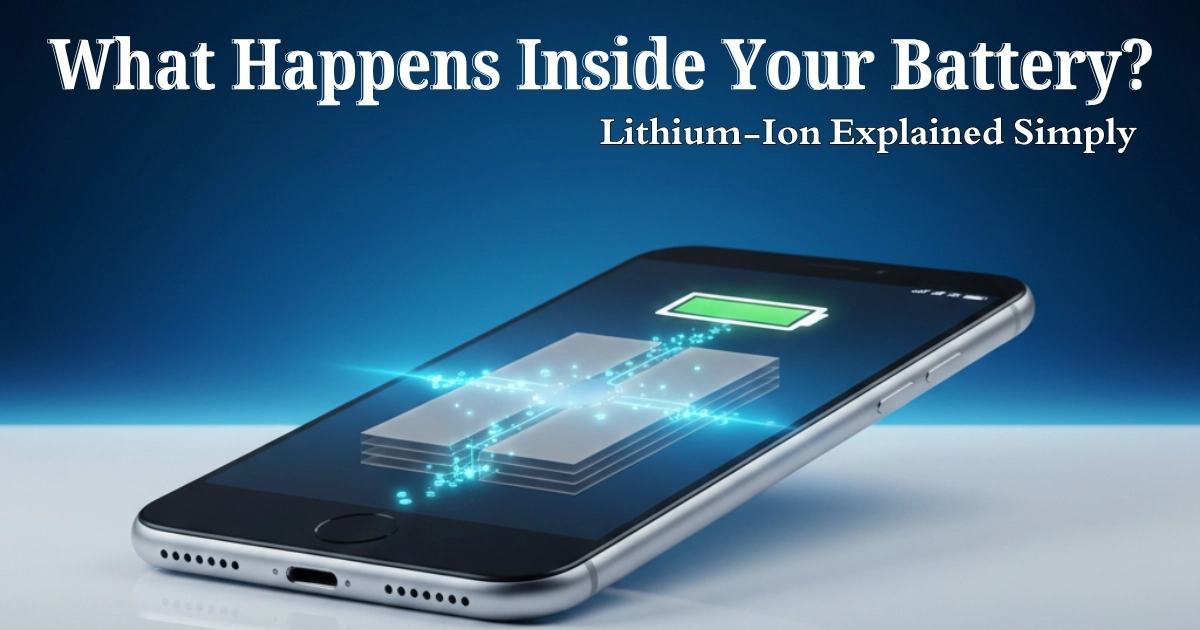
A lithium-ion battery works by using chemical reactions to store energy. Inside the battery there are two parts called electrodes. One is positive. The other is negative. These parts are separated by a liquid that helps tiny particles called lithium ions move between them. When we charge our phone these ions move to the part and store energy. When we use our phone the ions move back to the part and release energy that makes our phone work.
This movement of ions happens times during the life of the battery. Each time we charge and use our phone the battery gets a bit worn out. After a while the battery does not hold a charge like it used to. That is why expensive smartphones start to lose battery life after a few months or years.
The capacity of the battery is usually measured in something called milliampere-hours. A higher number means the battery can store energy.. It does not mean the battery will last longer. The size of the screen how well the processor works how much we use the internet and how well the software is made all affect how long the battery lasts. In Bangladesh we use a lot of data and the network signals are not always strong so our batteries often run out of power faster.
How we charge our phone also affects the health of the battery. Lithium-ion batteries do not like temperatures or being completely empty. Charging our phone from zero to full every day is not good for the battery. It is better to keep the battery level between levels. Modern phones have protections to prevent overcharging but heat from long charging sessions can still hurt the battery.
Fast charging is also something to think about. Fast chargers work by sending power to the battery when it is charging. This makes charging but it also makes more heat. Fast charging is safe if we use the chargers but doing it too much can make the battery age faster. In Bangladesh we often charge our phones at night or during breaks so we need to find a balance between convenience and taking care of the battery.
Some people think that leaving their phone plugged in all night hurts the battery.. Modern smartphones are made to stop charging when the battery is full. However keeping the phone at charge for a long time especially in warm places can still affect the battery. Some phones now have features that slow down charging when the battery is almost full.
In some parts of Bangladesh the power goes out. The voltage is not stable which makes it even more important to have a reliable battery. Using chargers and avoiding cheap ones can help protect the battery and the phone. Bad chargers can make the phone overheat. Send inconsistent power, which hurts the battery.
The battery will get old eventually. We can slow it down by being careful. We can turn off apps we do not need make the screen less bright and turn off things we are not using. Keeping the phone away from sunlight and high temperatures also helps the battery work better.
It is also good to know that lithium-ion batteries do not have something called the "memory effect". This means we do not have to use the battery all the way before charging it again. In fact charging it a bit at a time is better for the battery, than using it all the way down.
When the battery gets old we might need to replace it. In Bangladesh the cost of replacing a battery depends on the type of phone. Taking good care of the battery can delay this cost and make the phone work better.
Lithium-ion batteries are what make our smartphones work. By understanding how they work we can make choices. If we avoid charging habits keep the phone cool and use good accessories we can make the battery last longer and make our phone work better.