


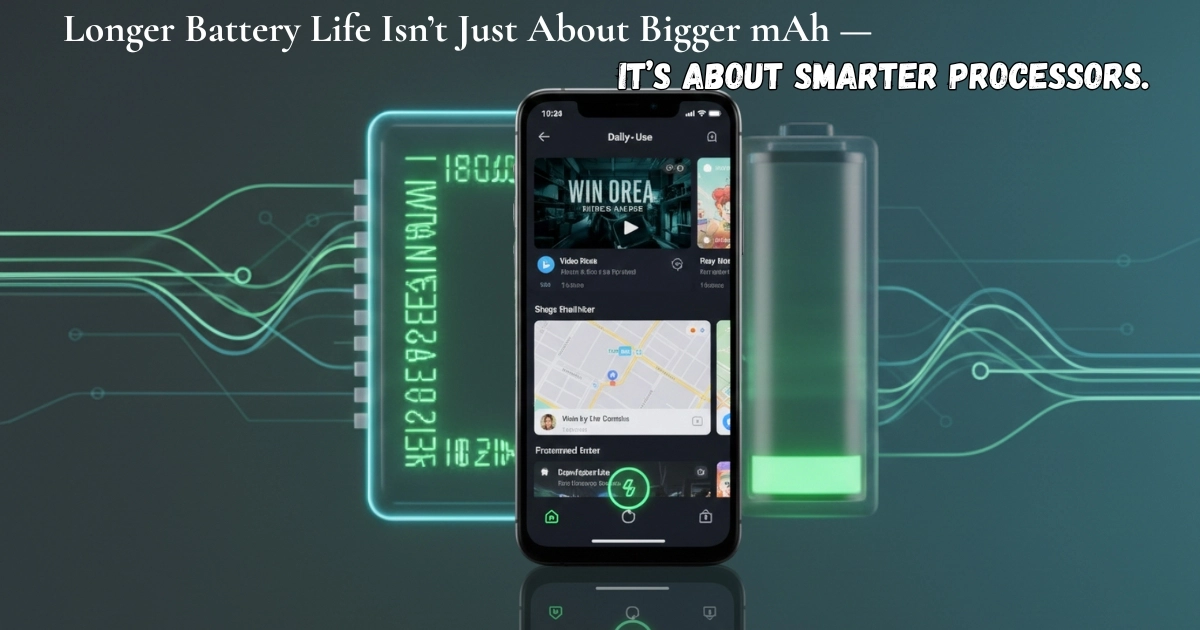


How New Mobile Processors Improve Battery Efficiency in Bangladesh
Battery life is often a top concern for smartphone users, especially in Bangladesh, where people rely on their devices throughout the day for communication, social media, entertainment, and work. Recent advances in mobile processor technology have significantly improved energy efficiency, allowing smartphones to perform better while consuming less power. Understanding how these processors work can help users choose devices that offer longer battery life and smarter performance.
New mobile processors achieve battery efficiency through several key approaches. First, modern chipsets use smaller manufacturing processes, such as 3nm, 4nm, or 5nm nodes. Smaller transistors consume less power, allowing more processing to occur without drawing excessive energy. For example, a 3nm processor can deliver higher performance than older 7nm chips while using significantly less battery. In Bangladesh, where users often spend long hours on their phones, this efficiency can translate into noticeable improvements in daily battery life.
Second, modern processors feature advanced CPU and GPU architectures optimized for energy savings. Multi-core designs allow the processor to assign tasks to cores of different performance levels. High-performance cores handle demanding tasks like gaming or video editing, while low-power cores manage simple tasks such as messaging or browsing. This dynamic allocation reduces unnecessary power consumption and ensures the device runs efficiently without slowing down.
AI-powered optimization is another major factor. Many modern processors include dedicated AI engines that learn user habits and predict system requirements. By understanding which apps are used frequently, how often the phone is idle, and what tasks are running in the background, the processor can intelligently manage resources to conserve battery. For Bangladeshi users, this means the phone can last longer on a single charge even during heavy usage of apps like Facebook, TikTok, or YouTube.
Intelligent power management extends to display and connectivity as well. Processors can adjust refresh rates, screen resolution, and network activity based on current usage. For instance, a phone may lower the refresh rate during casual browsing or reduce background data usage when performing less intensive tasks. These optimizations reduce overall energy consumption without affecting the user experience.
Thermal management also plays a crucial role in battery efficiency. When a phone heats up during gaming or video streaming, the processor may throttle performance to prevent overheating, which can reduce battery drain. New processors are designed to maintain optimal temperature levels while performing high-demand tasks, allowing users in Bangladesh to enjoy gaming, streaming, or multitasking without excessive heat or rapid battery depletion.
Manufacturers also pair efficient processors with adaptive charging features. By monitoring battery health and usage patterns, smartphones can optimize charging cycles, preventing overcharging and extending overall battery lifespan. For users in Bangladesh who often charge phones overnight or use them heavily during the day, these features help maintain long-term battery health.
Battery efficiency improvements are not only beneficial for heavy users but also help mid-range and budget smartphone users get more value from their devices. Even phones priced below BDT 30,000 are expected to feature processors with smart power-saving technologies in 2026, making energy-efficient performance accessible to a wider audience.
Overall, the combination of smaller process nodes, optimized CPU and GPU cores, AI-driven resource management, and thermal and charging optimizations ensures that modern mobile processors deliver better battery life without sacrificing performance. Users can enjoy smoother multitasking, longer gaming sessions, extended video streaming, and reliable daily performance.
In conclusion, new mobile processors in 2026 significantly improve battery efficiency through advanced designs, AI optimization, and smart power management. For users in Bangladesh, this means longer-lasting devices, reduced charging frequency, and a better overall smartphone experience. When selecting a new phone, considering processors with these energy-efficient technologies can help maximize both performance and battery longevity.