




Difference Between Wide, Ultra-Wide, and Macro Camera in Smartphones in Bangladesh
Smartphone photography has become an essential part of daily life in Bangladesh. From capturing family moments to posting photos on social media or recording short videos, people rely heavily on their phone cameras. To meet these needs, smartphone brands now include multiple camera lenses on the back, usually labeled as wide, ultra-wide, and macro. While they may look similar from the outside, each camera serves a very different purpose.
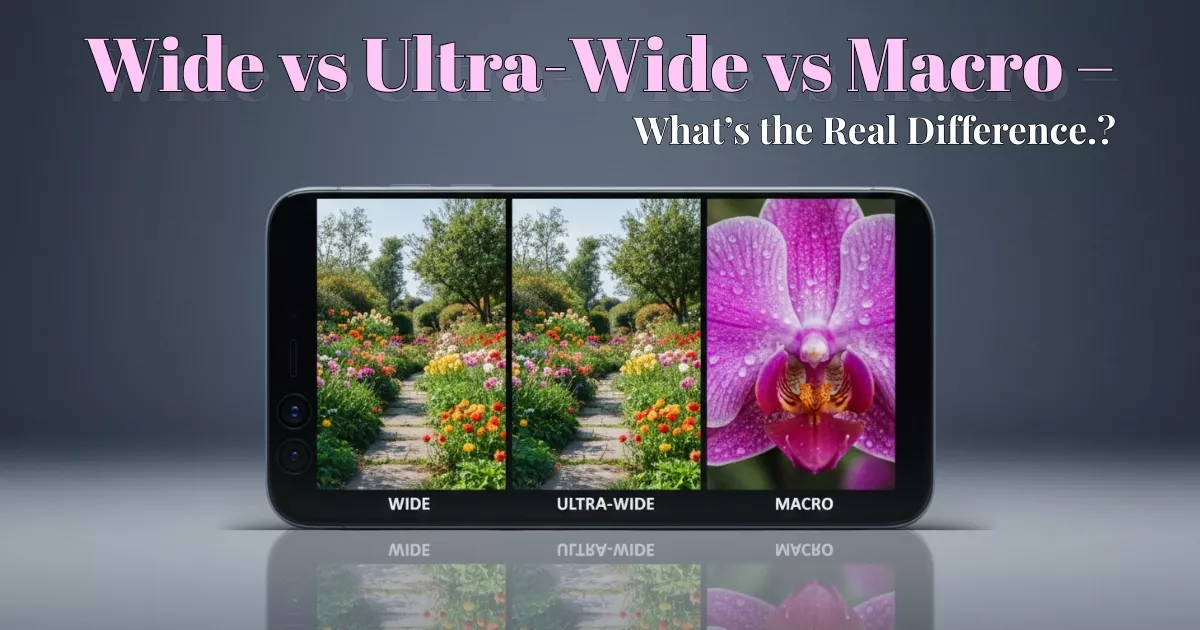
The wide camera, often called the main camera, is the most important lens on any smartphone. This is the camera most users rely on for everyday photography. It usually has the highest resolution, the best sensor quality, and the strongest image processing. When you open the camera app and take a photo without changing any settings, you are almost always using the wide camera. It captures scenes in a natural perspective, close to what the human eye sees. For Bangladeshi users, the wide camera is ideal for daily activities such as family photos, street scenes, food pictures, and casual portraits. It also performs better in low light compared to other secondary cameras.
Ultra-wide cameras are designed to capture a much wider field of view than the main camera. This means more of the scene fits into the frame without stepping back. Ultra-wide lenses are extremely useful in situations where space is limited or when you want to show more surroundings. In Bangladesh the camera is really popular for taking pictures when you travel, like mosques when you have a lot of people in one photo and for scenic views of rivers. The camera is also great for capturing city landscapes. People in Bangladesh like to use this camera for these things because it takes pictures. The camera is good, for travel photography. For example, when visiting Cox’s Bazar or taking photos of busy city roads, an ultra-wide camera can include more detail in a single shot.
However, ultra-wide cameras usually come with some compromises. They often have lower resolution and smaller sensors than the main camera. This can result in slightly less sharp images, especially in low-light conditions. Some ultra-wide photos may also show edge distortion, where objects near the corners appear stretched. Despite these limitations, the creative flexibility of ultra-wide cameras makes them very appealing to users who enjoy scenic and architectural photography.
Macro cameras serve a completely different purpose. Instead of capturing wide scenes, macro lenses are designed to take extreme close-up photos of small objects. This allows users to photograph details that are invisible to the naked eye, such as flower petals, insects, textures on fabric, or small product details. In Bangladesh, macro cameras are often used for creative shots, online product photography, and social media content where detail matters.
Unlike wide and ultra-wide cameras, macro cameras require you to be very close to the subject, sometimes just a few centimeters away. Because of this, lighting becomes very important. Many macro cameras struggle in low light and may need steady hands or additional light to produce sharp results. In budget smartphones, macro cameras often have low resolution and are more of a bonus feature than a professional tool. Still, when used correctly, they can produce visually interesting and unique images.
Understanding the difference between these cameras also helps when choosing a smartphone. Many users in Bangladesh focus on the number of cameras rather than their actual usefulness. A phone with three or four cameras may look impressive, but the quality of each lens matters more than quantity. A strong wide camera will always be more valuable than a weak macro lens that is rarely used.
Price also plays a role. Budget smartphones often include a basic wide camera and a low-resolution macro lens. Mid-range phones usually add a better ultra-wide camera, while higher-priced models focus on improving overall camera quality across all lenses. If your budget is limited and photography matters, it is better to choose a phone with a high-quality wide camera instead of multiple average ones.
Another practical point is how often each camera is used. Most users rely on the wide camera for nearly all photos. Ultra-wide cameras are used occasionally for special shots, while macro cameras are used less frequently and mainly for creative purposes. Knowing this helps users prioritize features based on real needs rather than marketing.
Conclusion
Wide, ultra-wide, and macro cameras each serve unique roles in smartphone photography. For most Bangladeshi users, a strong wide camera is the top priority, while ultra-wide adds creative flexibility and macro offers close-up detail. Understanding these differences makes it easier to choose a smartphone that truly fits your photography style and daily use.