


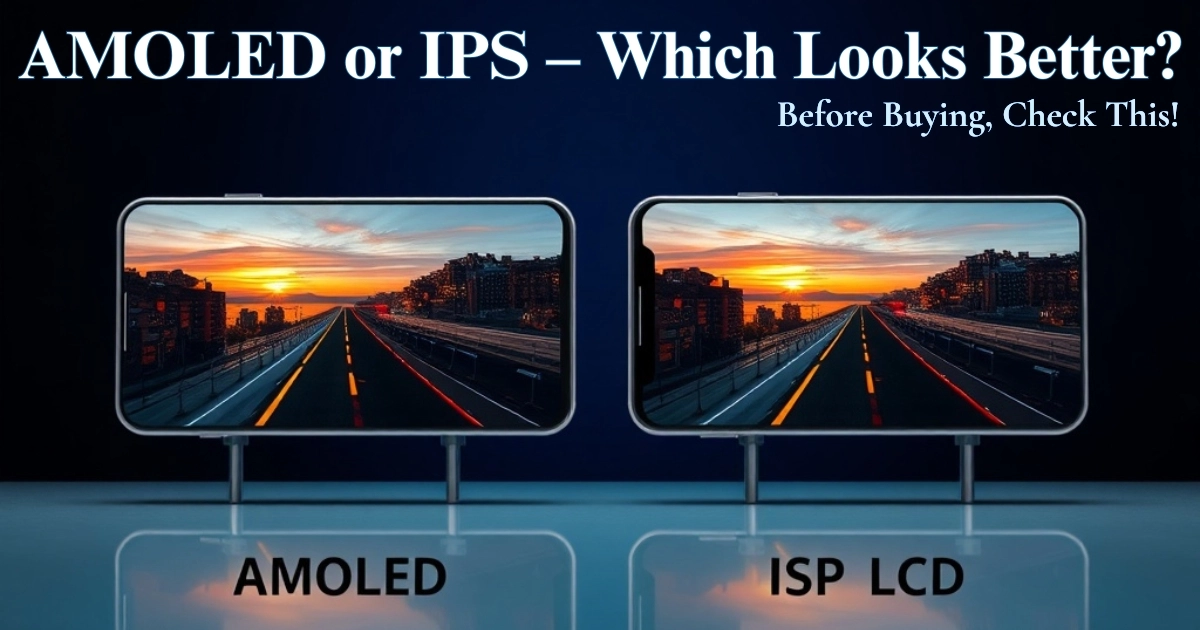


AMOLED vs IPS LCD: Which Smartphone Display Is Better in Bangladesh?
The smartphone display is one of the most important features for users today. It is the part of the phone you interact with constantly, whether you are watching videos, scrolling through social media, attending online classes, or navigating maps. In the Bangladesh mobile market, most smartphones use either AMOLED or IPS LCD displays. While both can deliver good visual experiences, they work in different ways and serve different user priorities.AMOLED is short for Active Matrix Organic Light Emitting Diode, a display technology where each pixel emits its own light independently. In this type of screen, every individual pixel generates its own light. When black is displayed, the pixel simply switches off completely. This is why AMOLED panels are known for producing deep blacks and strong contrast levels.
IPS LCD, short for In-Plane Switching Liquid Crystal Display, operates in a different way. Instead of each pixel emitting light, it relies on a constant backlight. The liquid crystals adjust to either block or allow light to pass through, which forms the image on the screen.
One of the most noticeable differences is color and contrast. AMOLED displays usually look more vibrant, with deeper blacks and stronger contrast. This makes videos and photos appear more dramatic, especially when watching content at night. IPS LCD displays offer more natural and balanced colors, which some users prefer for reading, editing photos, or long viewing sessions.
Brightness is another key factor, especially in Bangladesh where outdoor usage is common. IPS LCD screens often perform very well in direct sunlight because of their strong backlight. AMOLED displays have improved a lot in recent years and can also reach high brightness levels, but visibility can vary depending on quality and price segment.
Battery consumption plays an important role for users who rely on their phones throughout the day. AMOLED displays are generally more power-efficient, especially when using dark mode or black-themed interfaces. Since black pixels are turned off, less power is used. IPS LCD displays consume nearly the same amount of power regardless of what is shown on the screen because the backlight is always active. For users concerned about battery life, AMOLED has a clear advantage.
Durability and long-term performance are also worth considering. IPS LCD displays are known for their stability over time. They are less prone to image retention and burn-in issues. AMOLED screens, while improved, can still show burn-in if the same static content is displayed for long periods, such as navigation bars or status icons. This may matter to users who keep their phones for several years.
Cost is another major difference in the Bangladesh market. Smartphones with IPS LCD displays are generally more affordable and widely available in the budget and mid-range segments. AMOLED displays are often found in mid-range to premium phones, though entry-level AMOLED devices are becoming more common. For buyers with limited budgets, IPS LCD still offers good value and reliable performance.
Gaming experience can vary depending on personal preference. AMOLED displays enhance gaming visuals with deeper contrast and richer colors, making games look more immersive. IPS LCD screens, however, may offer more consistent brightness and color accuracy during long gaming sessions, which some gamers appreciate.
Eye comfort is often discussed by users who spend long hours on their phones. AMOLED displays can reduce eye strain when using dark mode, especially at night. IPS LCD displays, with their stable brightness and color tone, can be more comfortable for daytime reading and office-style use.
In daily Bangladeshi usage, both display types perform well. Students, office workers, and casual users may not notice huge differences unless they compare devices side by side. The choice often comes down to how the phone is used most of the time.
Conclusion
AMOLED displays offer better contrast, deeper blacks, and improved battery efficiency, making them ideal for multimedia lovers and heavy users. IPS LCD displays provide reliable brightness, natural colors, and better affordability. For users in Bangladesh, the better display depends on budget, usage habits, and personal preference rather than one being universally superior.