




AMOLED vs IPS Display: Which Is Better for Smartphones in Bangladesh?
When choosing a smartphone in Bangladesh, most buyers focus on camera quality, battery life, and price. However, the display is something you interact with all day, and it can significantly affect comfort and satisfaction. Two display technologies dominate the smartphone market today: AMOLED and IPS. Understanding how they differ can help you make a smarter buying decision.
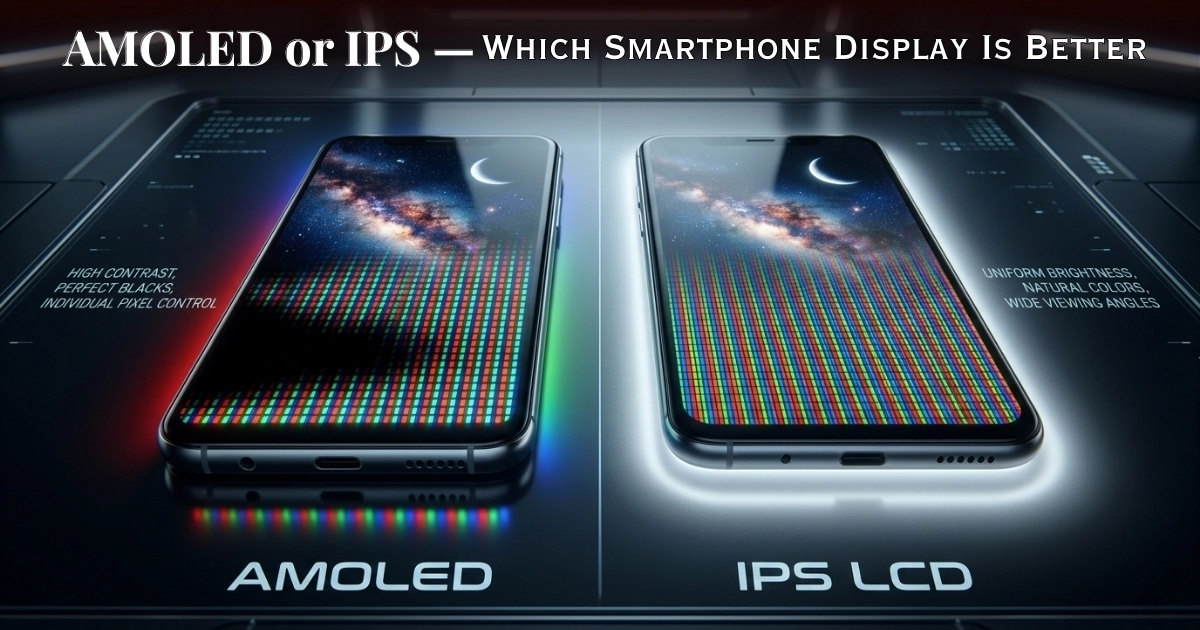
AMOLED displays are known for their vibrant colors and deep black levels. This is because each pixel in an AMOLED screen produces its own light. When a pixel is black, it is completely turned off. As a result, blacks look truly dark, and contrast appears very strong. This makes AMOLED screens especially enjoyable for watching videos, using social media, and browsing photos. Many premium smartphones from brands like Samsung use AMOLED displays as a key selling point.
IPS displays, on the other hand, rely on a backlight that stays on across the screen. While this means blacks are not as deep as AMOLED, IPS screens are known for their natural color accuracy and consistency. For users who prefer realistic colors over saturated visuals, IPS can feel more comfortable, especially for reading and long browsing sessions.
Outdoor visibility is an important factor in Bangladesh, where bright sunlight is common for much of the year. AMOLED displays generally offer higher brightness and better contrast outdoors, making text and images easier to see under direct sunlight. However, modern IPS displays have improved significantly and can still perform well outside, especially in mid-range and upper mid-range phones.
Battery consumption is another major difference. Because AMOLED screens can turn off individual pixels, they are more power-efficient when displaying dark content. This is useful for users who use dark mode or watch videos frequently. IPS displays consume power more evenly since the backlight is always on, which can lead to slightly higher battery usage. For Bangladeshi users who rely on their phones throughout long days, this efficiency difference can matter.
Eye comfort is often overlooked but very important. AMOLED displays tend to use pulse-width modulation to control brightness, which can cause eye strain for some users during long use, especially at low brightness. IPS displays usually have more stable brightness control, which some people find easier on the eyes. If you spend long hours reading or working on your phone, IPS might feel more comfortable, depending on your sensitivity.
Durability and long-term performance are also worth considering. AMOLED screens can suffer from burn-in over time if static images are displayed frequently. This means icons or navigation bars may leave faint marks on the screen after years of use. IPS displays do not have this issue and often maintain consistent quality for a longer time. For users who plan to keep their phones for many years, this can be an important factor.
Price plays a big role in the Bangladesh market. Smartphones with AMOLED displays are usually priced higher. Budget and mid-range phones with IPS displays often offer better value for money. For example, phones under BDT 30,000 mostly use IPS screens, while AMOLED is more common in devices priced above that range. This makes IPS a practical choice for students and budget-conscious users.
That said, AMOLED is no longer limited to flagship phones. Many affordable smartphones now offer AMOLED displays, giving users access to premium visuals at lower prices. Brands focus on balancing features to attract buyers who want a stylish display without paying for top-tier hardware.
Usage habits should ultimately guide your choice. If you enjoy watching videos, gaming, and using social media, AMOLED’s deep contrast and vivid colors can enhance your experience. If your phone is mainly for reading, messaging, and everyday tasks, IPS provides a reliable and comfortable display without extra cost.
Companies like Apple have also demonstrated that both technologies can deliver excellent experiences when well optimized. This shows that display quality depends not only on the technology itself but also on how well it is implemented.
In conclusion, neither AMOLED nor IPS is universally better for everyone in Bangladesh. AMOLED offers richer visuals, better contrast, and improved battery efficiency, making it ideal for entertainment-focused users. IPS delivers natural colors, stable performance, and better affordability, making it a strong choice for practical everyday use. The best display is the one that matches your usage style, budget, and long-term expectations.